Guardrail Corrosion in Hawaii: What Fresh Paint Hides
Why Hawaii's Older Steel & Aluminum Guardrails Fail
Fresh Paint Can Hide Serious Corrosion
Guardrails are critical to a building's life safety. Regularly cleaned and painted railings may look safe, but corrosion often hides under fresh paint. Most hotels and condominiums in Hawaii were built in the 1960s and 70s, and after decades of exposure to salt air and rain, many of the original railings are badly corroded and beyond repair. Understanding why these systems fail helps avoid repeating the same mistakes with their replacements.
Why Painted Steel Railings Fail
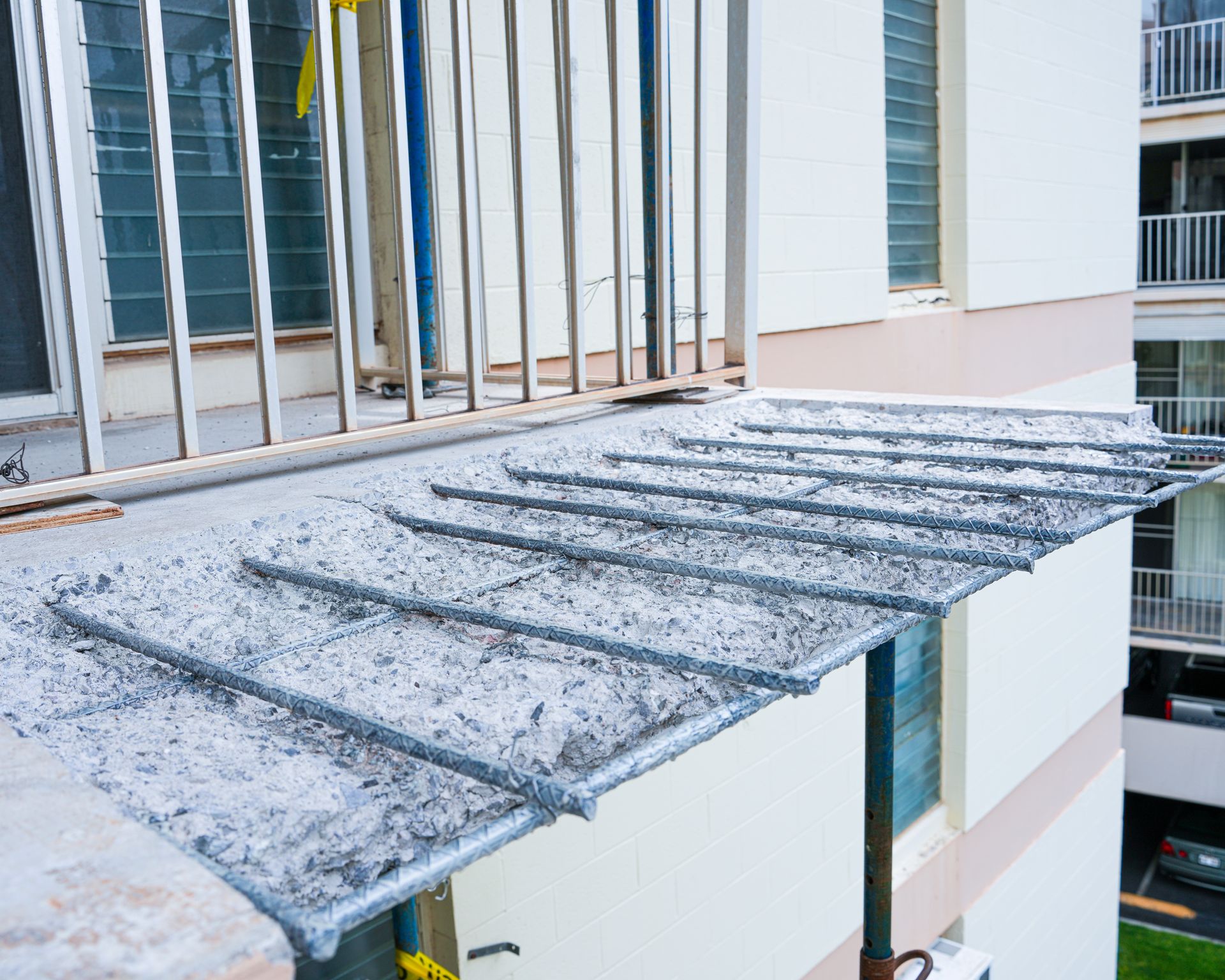
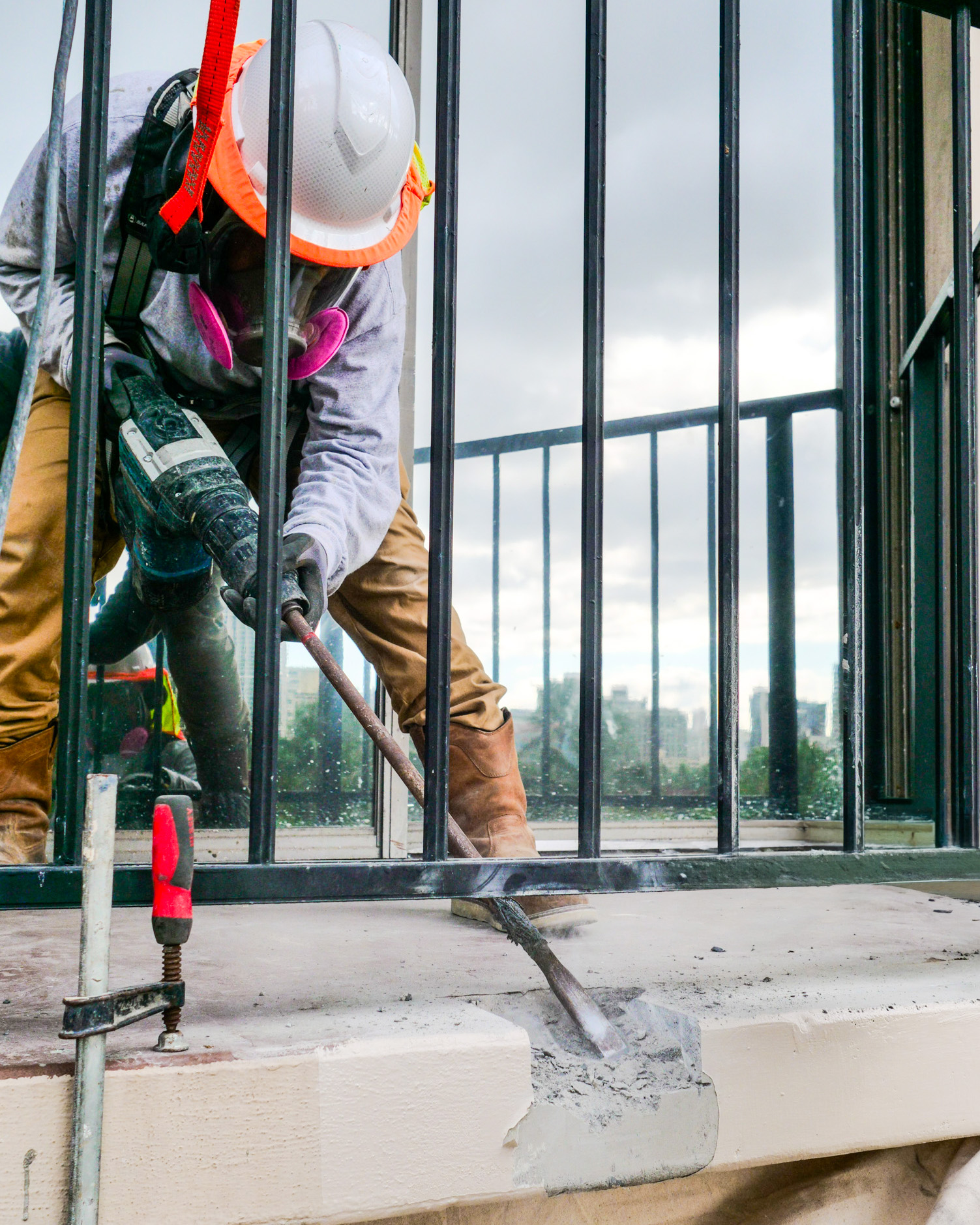
Steel railings from that era were usually factory welded, painted, and embedded in concrete walkways and decks. The main issue is the material itself: non-stainless steel is simply not the right choice for outdoor applications near the ocean. Paint isolates the steel from salty rainwater, but once the coating is damaged or water penetrates it, corrosion starts immediately. As the corroding steel expands, cracks appear in the paint and in the concrete where the posts are embedded, eventually making the posts loose and unsafe. Those cracks then let in even more water, which corrodes the rebar inside the deck and compounds the damage.
If new steel railings are the right fit for your building, use the highest quality material available, properly coated or stainless. High quality paint or powder coat can last decades even in a harsh coastal environment, as long as the railings are cleaned and maintained per the manufacturer's instructions. If the coating gets damaged, when moving furniture for example, repair it as soon as possible so the steel is not left exposed to the elements.
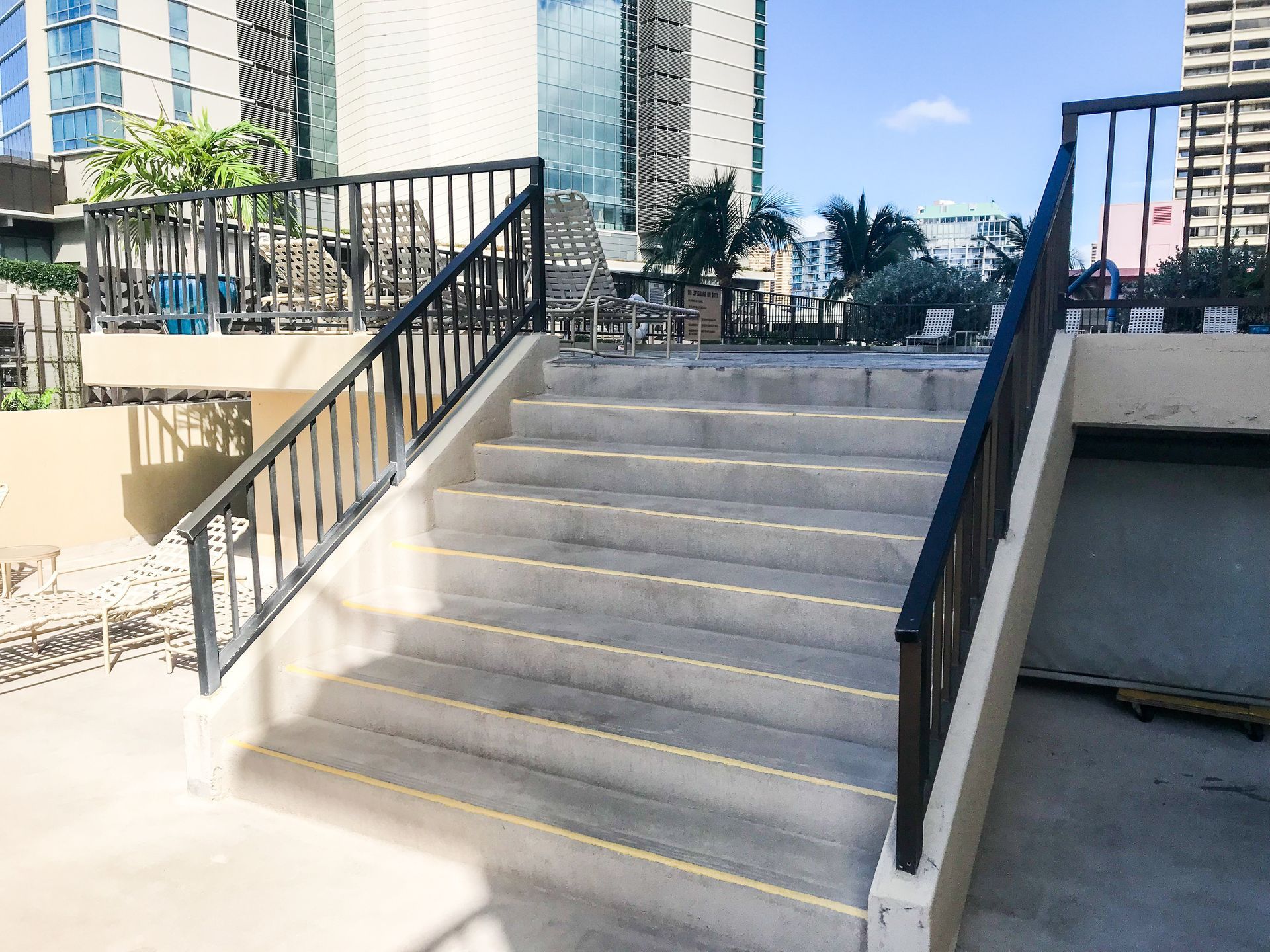 |
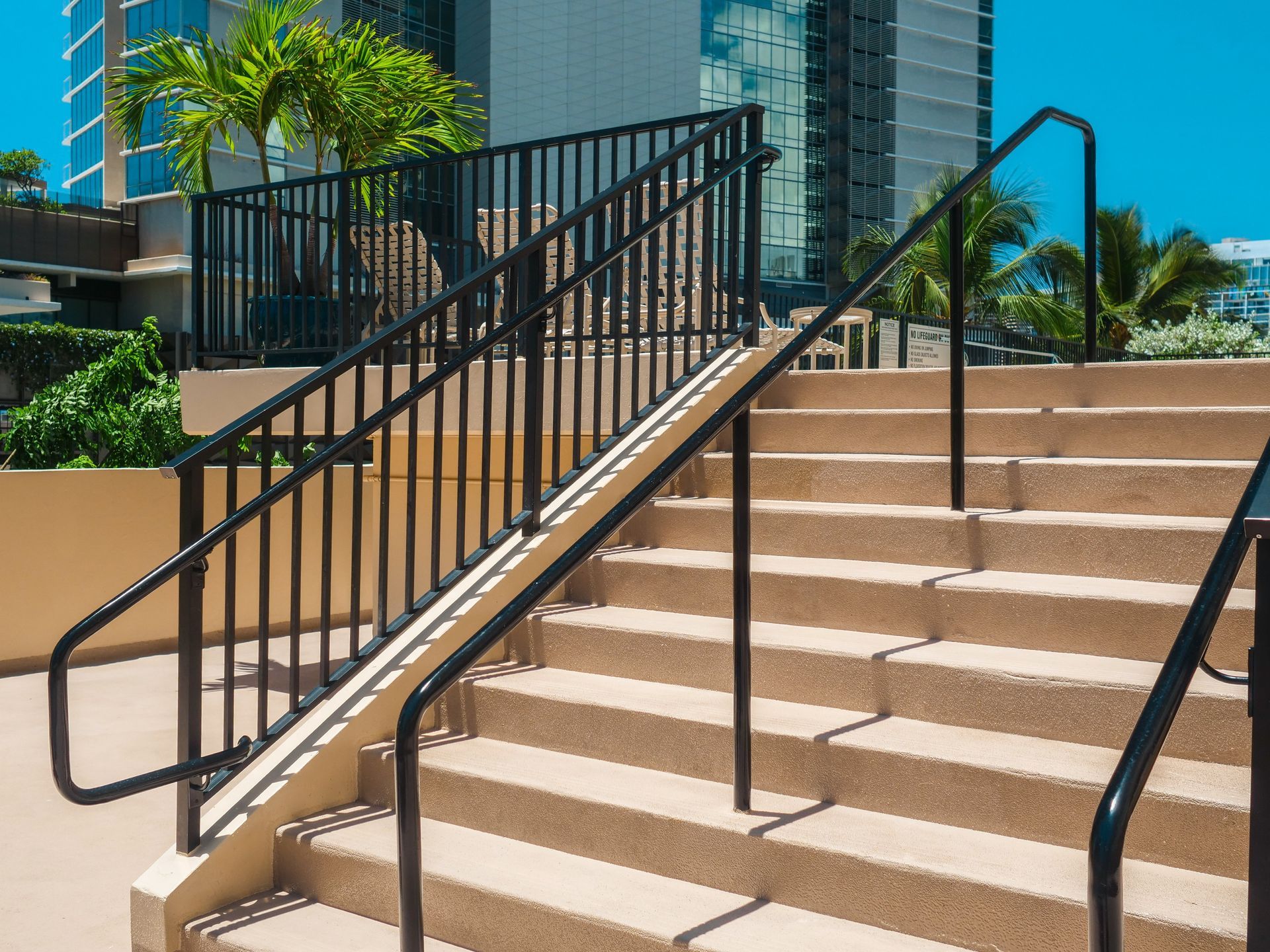 |
| Before |
After |
Why Aluminum Railings Fail Differently
Aluminum railings from that period are usually anodized. Anodizing is an electrochemical process that converts the metal surface into a durable, corrosion-resistant oxide finish, and anodized aluminum can be exposed to rain for decades with almost no effect on the integrity of the material. Yet these old aluminum railings also show corrosion, for a completely different reason. They are assembled with mechanical fasteners rather than welds, and those screws are usually steel, so they corrode. After decades of salty rain they loosen or simply break, and just a couple of corroded fasteners can make an entire railing unsafe.
High quality 316 stainless steel fasteners help, but they do not solve the problem completely. Aluminum and steel are dissimilar metals, and when they are in contact in a corrosive environment, the aluminum experiences accelerated galvanic corrosion. The fix is coated fasteners: a zinc and aluminum-rich two-coat system applied at the factory insulates the aluminum from the steel and provides excellent corrosion resistance.
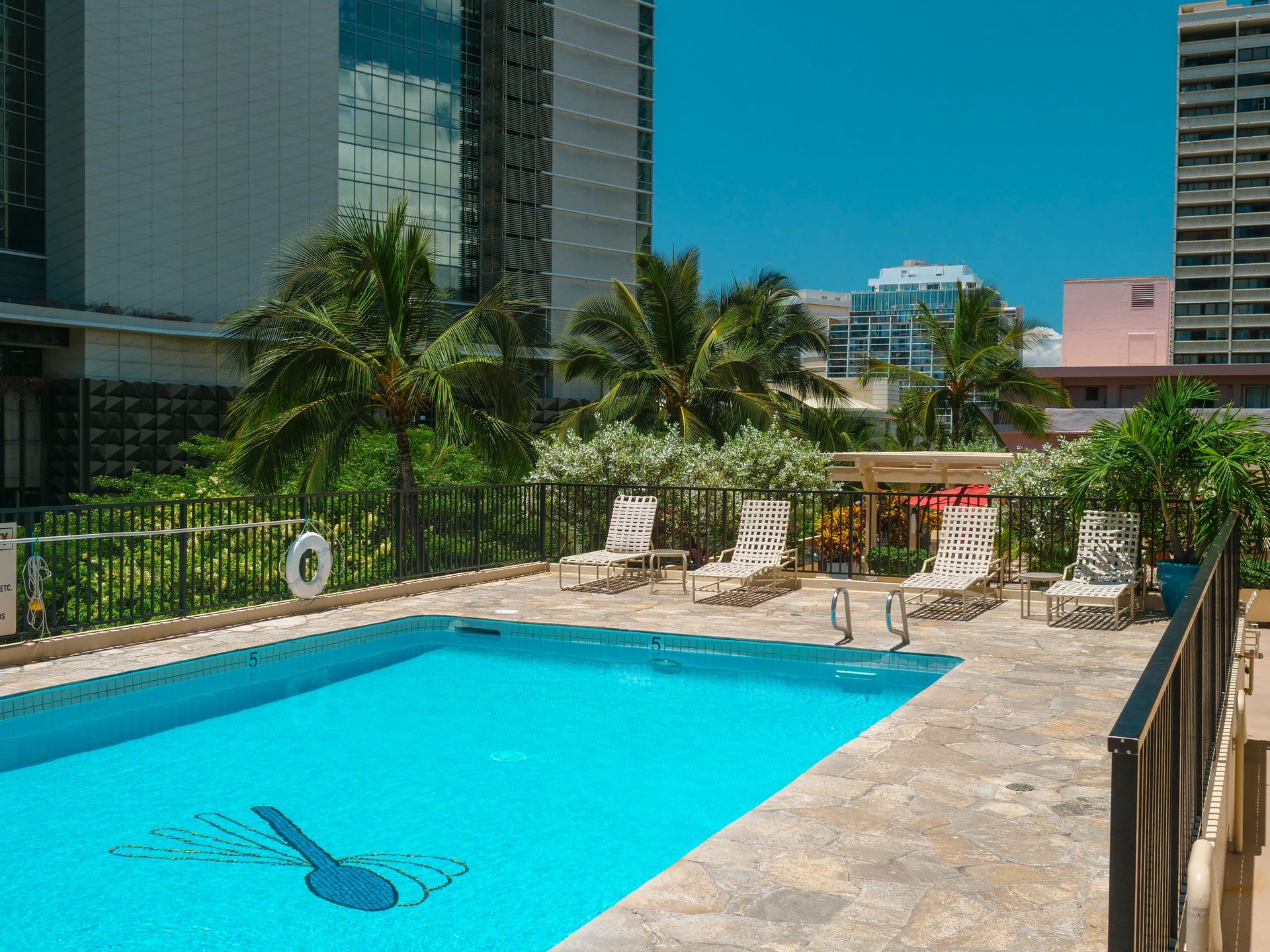
In the Four Paddle project above, the new guardrails are anodized aluminum while the handrails are painted stainless steel, a combination chosen so each component matches the demands of its location.
Aluminum and Concrete Don't Mix
Aluminum also reacts with the alkalis in Portland cement concrete. Aluminum embedded directly in concrete can corrode significantly, expanding and causing cracks and spalling, just like steel. Long-term contact should be avoided by coating embedded aluminum components with an alkali-free material such as epoxy to insulate them from the concrete.
The Bottom Line for Hawaii Buildings
You can have new, decorative, safe, and long-lasting railings in steel or aluminum, coated or anodized, if you do your research and choose the right product for your specific conditions. For a closer look at how new railing systems are mounted and fastened for Hawaii's coastal environment, see our post on railing systems built for Hawaii. Pay attention to the details, and make sure you hire a licensed contractor whenever you replace anything critical to your building's life safety.
If your building's railings are showing rust stains, loose posts, or cracked concrete at the post bases, Seal Masters of Hawaii can assess their condition and walk your board through replacement options.